
CATS IN THE MATRIX
A 'Cat in the Matrix' is a fleeting moment when the global technological system reveals its hidden mechanism. Maps that lead to nowhere, bugs that break digital continuity, storms that rattle networks.
Like the black cat in the Matrix movies, each of these glitches is an omen, a moment when the simulated perfection of the Tecnosphere crumbles, revealing the vulnerability and complexity of the artificial environment that we inhabit.
By collecting them, this archive offers a counter-narrative to techno-optimism, reframing failure as a critical lens for designing otherwise.
CATEGORIES
Glitches come in many forms – each a symptom of the system’s limits.
SHOW ALL
BUGS
Internal system errors: software malfunctions, loops, crashes, and unpredictable behaviors.
BUGGED
HACKS
Intentional interventions that force systems to behave unexpectedly: intrusions, sabotage, or manipulations.
HACKED
HUMAN ERRORS
Failures arising from human decisions, negligence, or misunderstandings in interacting with complex systems.
HUMAN ERROR
POLITICS
Institutional choices, omissions, or regulations that generate systemic dysfunctions.
POLITICAL
ENVIRONMENT
Natural disasters or ecological dynamics that disrupt the continuity of technical systems.
ENVIRONMENTAL
POLITICAL

2025 | EASTERN EUROPE
→ GPS often operates inaccurately due to jamming near Russia
Electronic warfare activities, mainly of Russian origin, deliberately disrupt GPS signals causing issues to flights passing in the areas close to the Russian borders.
HUMAN ERROR

2025 | NORWAY
→ Thousands gets wrongly notified to have won the lottery
A manual coding error in the conversion of Euros to Norwegian crowns caused the sending of a fake notification to thousands of Norwegians, telling them they won the national lottery.
POLITICAL

2025 | NETHERLANDS
→ Sanctions turn off International Criminal Court accounts
Trump sanctions against the ICC chief prosecutor resulted in suspending his Microsoft accounts, causing a stop of important tribunal’s work, preventing justice from taking course.
BUGGED

2025 | CHINA
→ A humanoid robot becomes violent with humans during test
Security footage from an undisclosed Chinese factory went viral, showing a humanoid robot initially sitting dormant, and then suddenly attacking two workers.
HUMAN ERROR

2025 | ITALY
→ 4-years-old kid makes 70 emergency calls in an hour
Playing with a smartwatch at school, a young kid caused chaos by making repeated emergency calls to the police, who couldn’t figure out the reasons for the calls.
BUGGED

2025 | SRI USA
→ Glitch causes Jeep screens to constantly show pop-ups
Jeep owners reported that an annoying full screen pop-up message kept appearing every time they stopped the car. The company reported it was an error that got fixed.
ENVIRONMENTAL

2025 | SRI LANKA
→ A monkey causes general blackout in Sri Lanka
Sri Lanka suffered a national power outage due to a monkey coming in contact with the grid transformer located south of Colombo, causing an imbalance in the system.
HACKED
2025 | ITALY
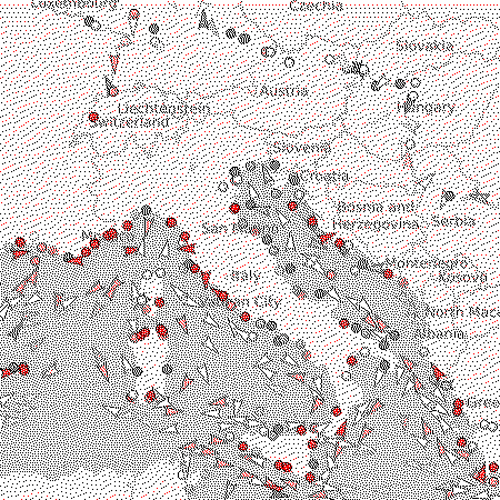
→ 15-years old hacker diverts naval routes in the Mediterranean
The young Italian hacker was diverting the routes of oil tankers and also targeting the Ministry of Education website, changing failing grades into positive ones.
ENVIRONMENTAL

2024 | USA
→ Robot vacuum cleaner escapes from home after earthquake
California residents had a good laugh after an earthquake struck the region, when a robotic vacuum cleaner got disconnected from its base and was roaming the streets.
BUGGED

2024 | USA
→ Drones fall from the sky during a show and hit the crowd
A 7 year old boy ended up in hospital after a festive spectacle in Orlando, due to several small drones colliding on each other and falling to the ground.
HUMAN ERROR

2024 | ITALY
→ Italian ATMs out of order due to work on Swiss gas pipelines
Gas pipeline installation in Switzerland caused damage to network cables, resulting in major disruptions to digital payment services across Italy during black friday.
BUGGED

2024 | INDIA
→ Car follows Google directions over an unfinished bridge
Three men lost their lives in a car crash, following Google Maps on a route passing over a bridge that recently partially collapsed because of flooding in Uttar Pradesh, India.
HACKED

2024 | CHINA
→ AI-powered mini robot ‘kidnaps’ 12 larger robots and escapes
A small Chinese robot coordinated an escape from a showroom, allegedly responding to one of the bigger robots complaints about his non-stop work schedule.
HUMAN ERROR

2024 | BALTIC SEA
→ Dragging anchor (deliberately?) cuts undersea internet cables
A Chinese ship has caused a minor connectivity outage in the Baltic countries by damaging two fiber optic cables with its anchor.
HACKED

2024 | USA
→ Vacuum cleaner robots start yelling racial insults to their owners
Hackers gained control of several household robots in the United States, exploiting security weaknesses such as poorly protected Bluetooth connections and PIN security.
HACKED

2024 | USA
→ Smart glasses hacked to instantly recognize people in public
Two Harvard students demonstrated that Meta’s Ray Ban smart glasses can be easily hooked to a facial recognition system and used to get phone numbers and addresses.
BUGGED

2024 | USA
→ Driverless cars wake residents with nighttime honking
30 electric vehicles of a robotaxi company started honking in San Francisco in the middle of the night, creating a minor traffic jam in a car park.
POLITICAL

2024 | TURKEY
→ Turkey blocks IG due to the removal of posts on Hamas chief
The Turkish government blocked access to Instagram for 9 days due to alleged censorship of condolence content related to the assassination of Hamas leader Ismail Haniyeh.
HUMAN ERROR

2024 | WORLDWIDE
→ Faulty security update causes the biggest outage in IT history
On July 19 a global IT outage caused millions of Windows systems to crash worldwide. The root cause was a human mistake in the Crowdstrike security software update.
POLITICAL

2024 | FRANCE
→ Grindr 'discover' feature was blocked in the Olympic Village
Grindr disabled its location services inside the Olympic Village in Paris to protect athletes coming from countries where being LGBTQ+ is dangerous or illegal.
ENVIRONMENTAL

2024 | OUTER SPACE
→ Starlink satellites experience degraded service due to solar storm
Musk’s Starlink system experienced a major service degradation due to a very strong geomagnetic storm, which interfered with the satellites’ orbit and performance.
BUGGED
2024 | ITALY
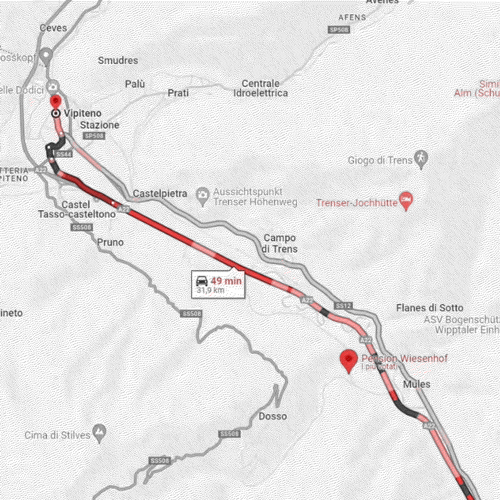
→ Queues on South Tyrol roads due to Google Maps error
Thousands of cars exited the Brenner Motorway in Sterzing, clogging back roads to Austria, because the app was reporting a stoppage that wasn't there.
ENVIRONMENTAL

2024 | CANADA
→ Farmers’ GPS equipment doesn’t work due to solar storm
Strong solar storm caused GPS systems used in tractors for farming to go offline during peak planting season, forcing several farmers to completely stop their operations.
ENVIRONMENTAL

2024 | IVORY COAST
→ Seismic activity causes 4 undersea internet cables to malfunction
Several Western African countries went completely offline due to damages to major undersea cables placed in the ‘Bottomless Hole’ canyon off Ivory Coast.
BUGGED

2024 | WWWW
→ Gemini AI rewrites history in the effort of delivering ‘woke’ images
Users generated unrealistic representation of historical figures, such as female popes and asian nazis, due to the finetuning of the AI model being too politically correct.
BUGGED

2022 | USA
→ Man dies following GPS directions at night on a destroyed bridge
A man fell from a bridge that was inoperative since 2013, following Google Maps directions during the night in North Carolina. In 2023 his widow sued Google.
POLITICAL

2022 | UK
→ London faces building ban due to excessive pressure on the grid
Newly built data centers in the UK use the equivalent amount of electricity as a small town, forcing the Greater London Authority to consider a 13-years housebuilding ban.
ENVIRONMENTAL

2022 | UK
→ Data centers in London knocked offline by heat wave
Some websites hosted on data centers in London went offline due to excessive heat (reaching up to 40°C) in the city, which caused problems with the cooling systems.
ENVIRONMENTAL

2021 | FRANCE
→ Major fire in data center sends 1.5 million websites offline
One of OVHCloud data centers took fire during the night, causing the loss of data from several videogames, and sending offline a chunk of the .FR web space.
HACKED

2020 | UK
→ Artist generates a fake traffic jam walking with 99 smartphones
By carrying second hand smartphones in a handcart throughout London, Simon Weckert generated a fake traffic jam in Google Maps during the pandemic.
BUGGED

2018 | WORLDWIDE
→ Users report Alexa doing a creep laugh without being summoned
Amazon declared that the system sometimes mistakenly hears “Alexa, laugh, and starts performing a witch-like laughter that creeps its users in their own homes.
HUMAN ERROR

2017 | UK
→ Flights deleted because a contractor switched off power
A worker inadvertently switched off power at a British Airways data center, causing the cancellation of several flights and consequent distress for 75.000 travelers.
HUMAN ERROR

2016 | NEW ZEALAND
→ Man can’t obtain a passport due to his eyes’ shape
A man of Asian descent struggled to get his passport done with an automated digital service because the system kept interpreting his eyes as being closed in the photo.
POLITICAL

2016 | VENEZUELA
→ Venezuelans lose half an hour of sleep to save electricity
Clocks have been moved forward by the government in an effort to save on night-time use of lighting and air conditioning, which was especially draining for the national power grid.
HACKED

2016 | WWW
→ Microsoft chatbot is taught to swear and be racist on Twitter
Tay AI bot, just 24 hours after being put online on Twitter, learned from users to produce inflammatory and aggressive content. Microsoft took it down right away.
ENVIRONMENTAL

2015 | BELGIUM
→ Lightning strikes cause Google Cloud services to go offline
A lightning storm in Belgium struck the local utility grid, causing power interruption in one of Google’s data centers in St. Ghislain, and knocking some cloud storage systems offline.

→ Signal a cat
We will review it and add it to the list.
This archive is curated by Annapaola Vacanti